


Three steps to a printed page
-
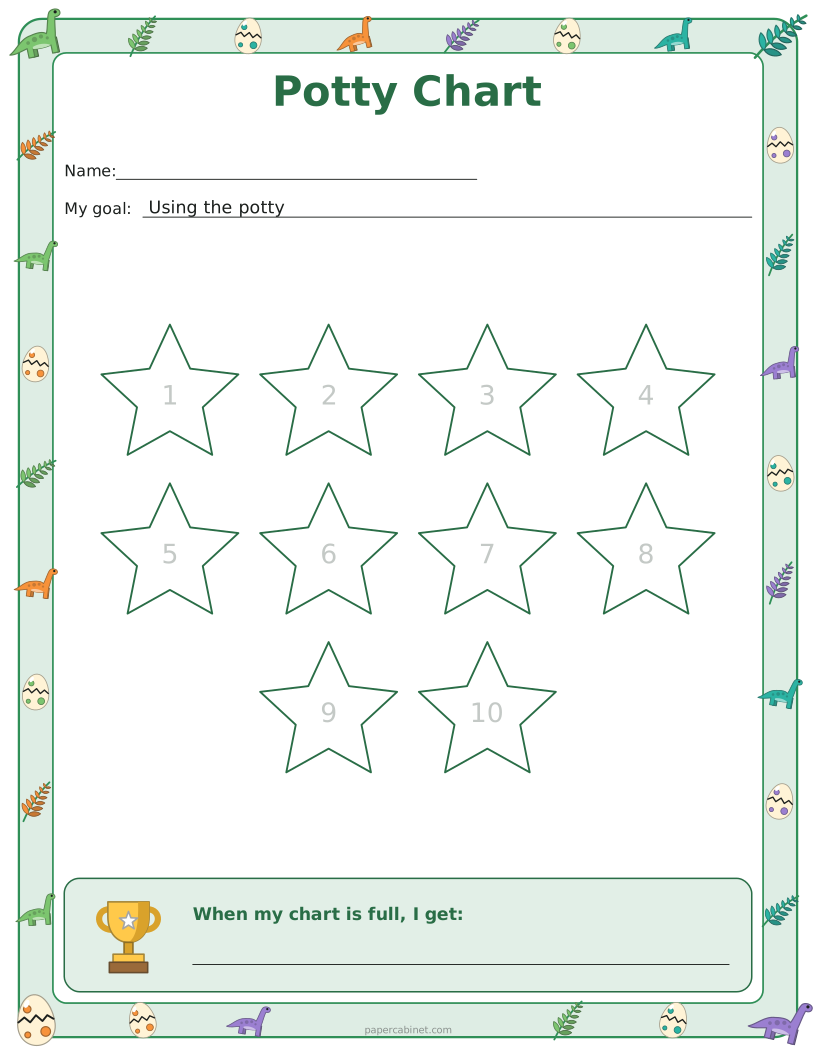
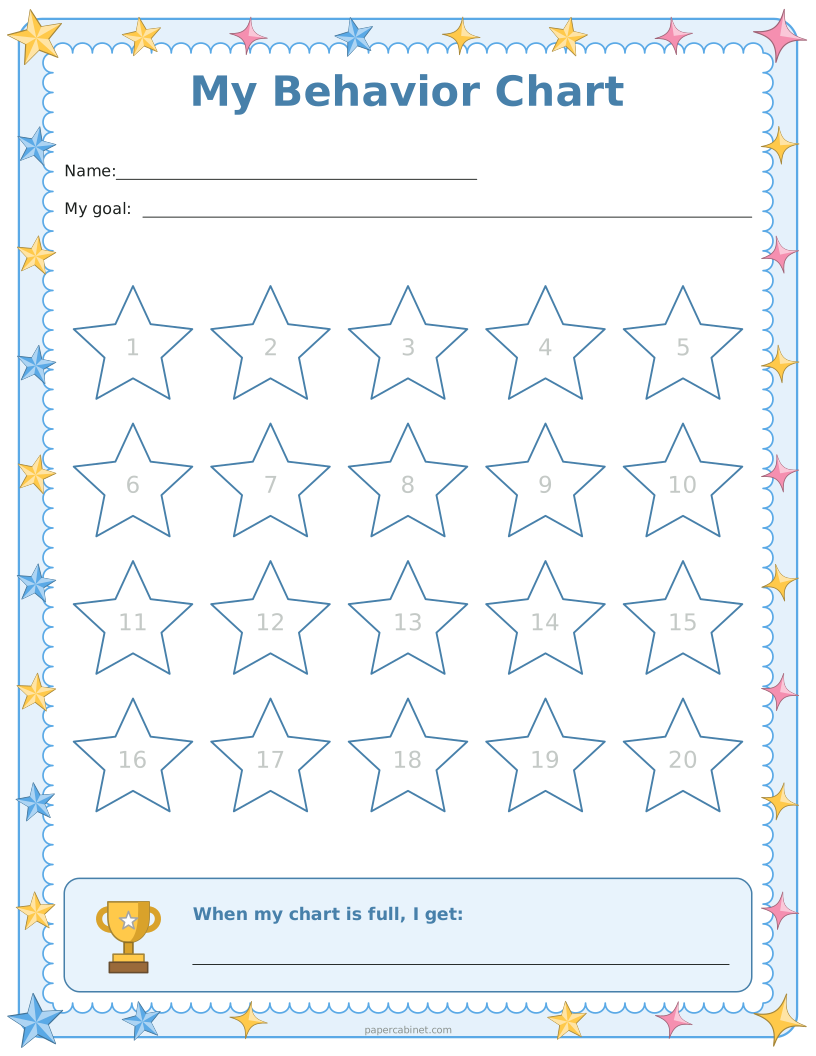
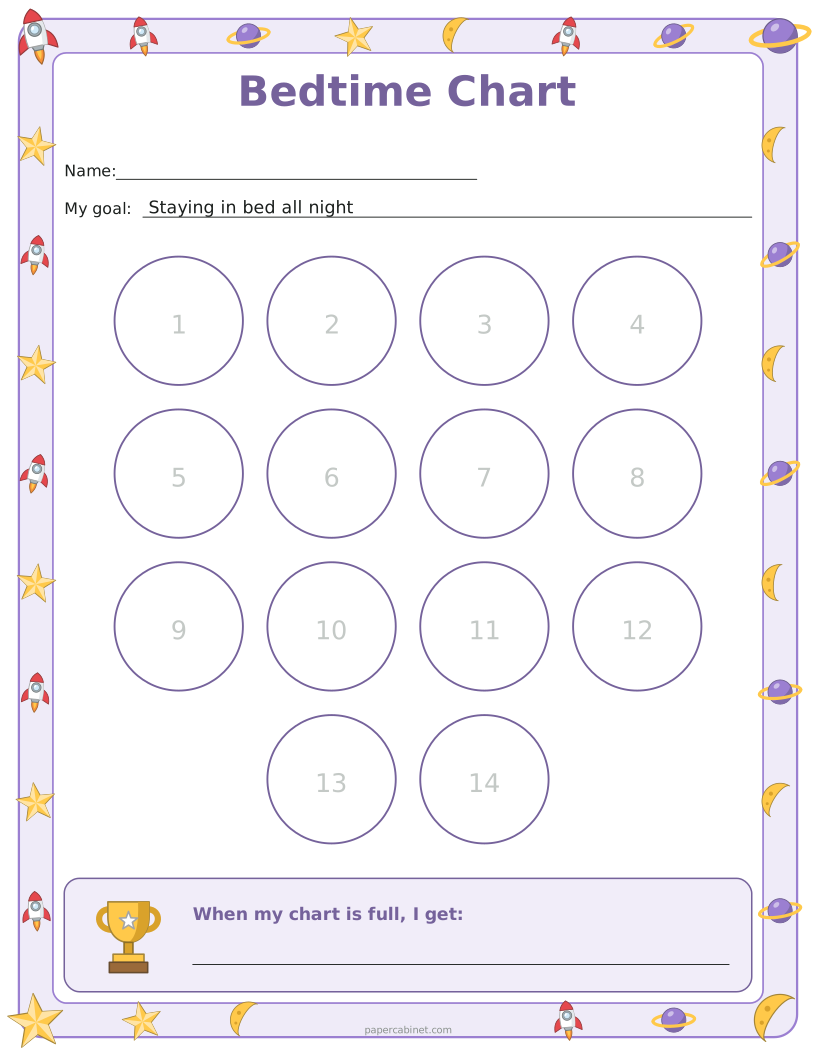
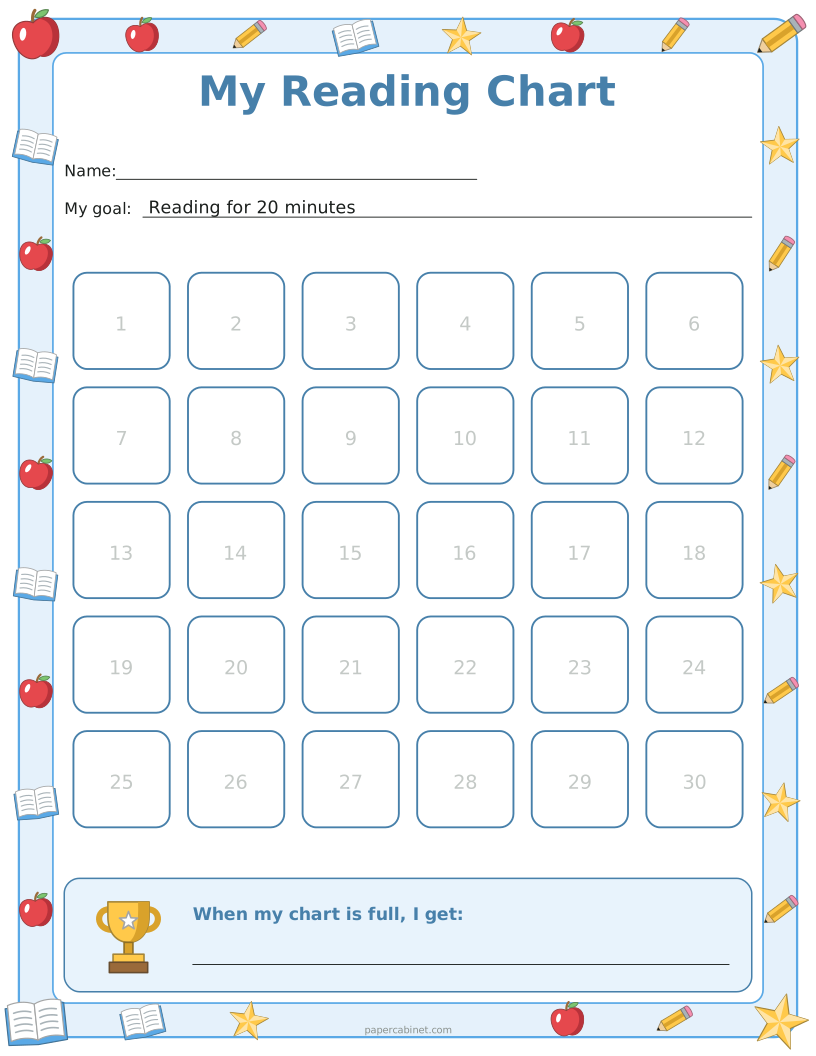
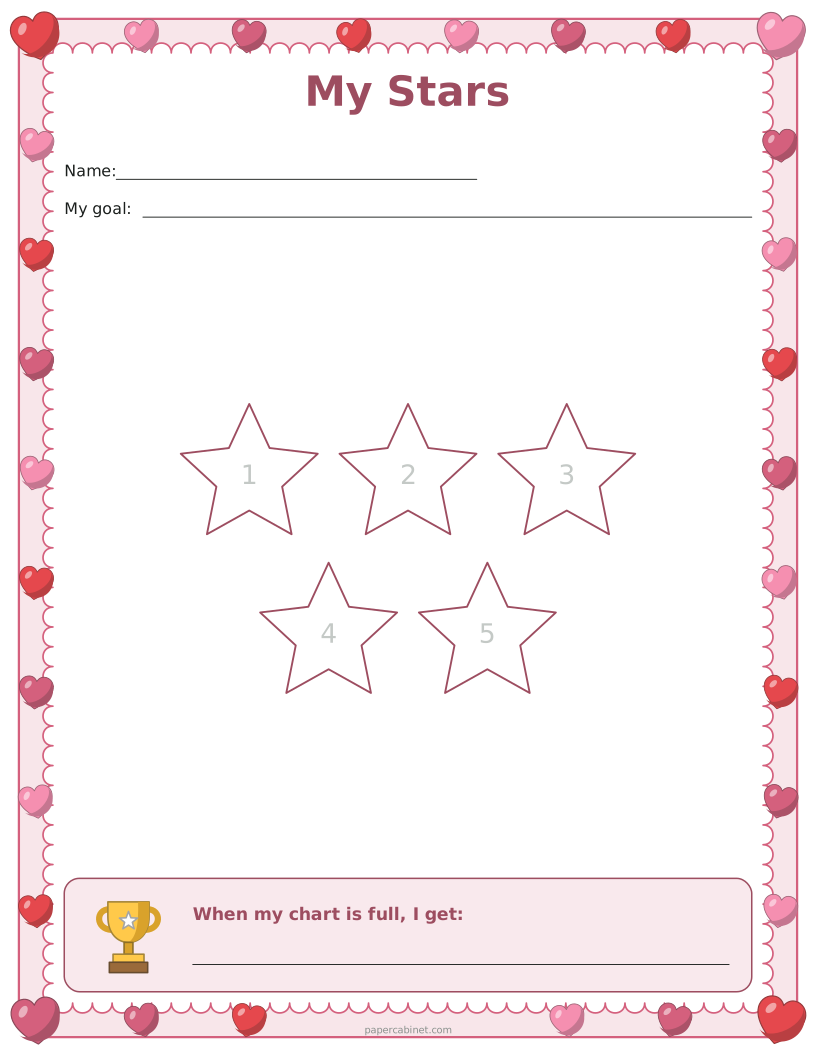
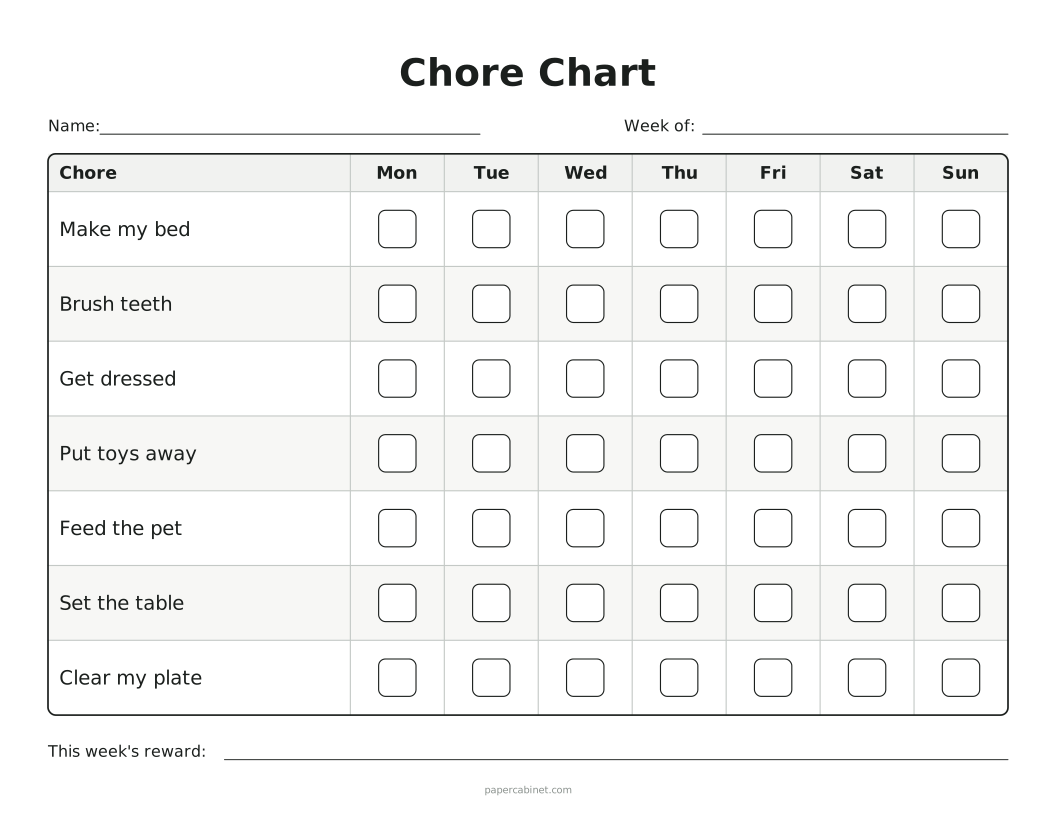
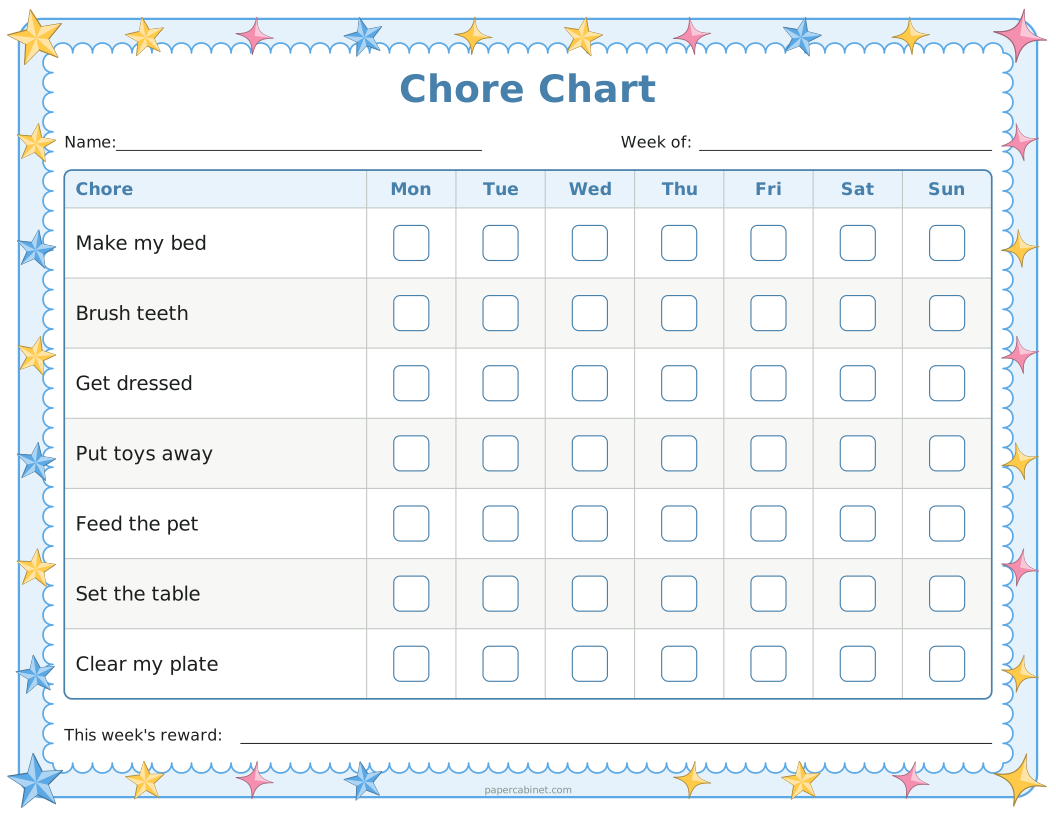
Type the child's name, the goal and the reward. Any of them can be left blank to write in.
-
Choose how many stickers fill the chart. Five to ten for little kids, more for older ones.
-
Press Print and stick it on the fridge at their eye level.
Making a sticker chart actually work
Pick one goal at a time and say it the way you want it done: "Stay in bed until the clock turns green," not "Be good at bedtime." A child who knows exactly what earns a sticker will try for it.
Give the sticker straight away, and let them put it on themselves. For a three-year-old, a reward a week away might as well be a year away, so start with 5 spaces and make the first chart easy to finish. Once they have won one, the next chart can be longer.
What to use as a reward
Rewards do not have to cost anything. Picking dinner, an extra bedtime story, a trip to the park, or staying up 15 minutes later all work. Kids often care more about choosing than about the thing itself.
Frequently Asked Questions
How many sticker spaces should a reward chart have?
For ages 2 to 4, 5 to 10 spaces. For ages 5 to 8, 10 to 20. Older kids can work toward 30 or more if the reward is bigger. The first chart should be easy to finish.
Can I make a reward chart without stickers?
Yes. Kids can color in each star, or you can stamp it or draw a smiley face. Choose circles or squares if you use round stickers or stamps.
Can I print a reward chart for more than one child?
Print one chart, change the name, and print again. Each child having their own chart avoids arguments about whose sticker is whose.