The right sticker chart depends on age. Toddlers need 5 to 10 spaces, one simple goal and a reward the same day the chart fills. Children from 4 to 6 can manage 10 to 20 spaces over a week or two. From about 7, kids can work toward 20 to 30 spaces and a bigger reward, and help choose the goal.
Published October 24, 2026
By Paper Cabinet
Whatever the age, the chart works when the goal is one clear behavior, the sticker comes straight away, and the first chart is easy to finish. The table below sets out a starting point for each age, and the sections after it cover goals and rewards that work.
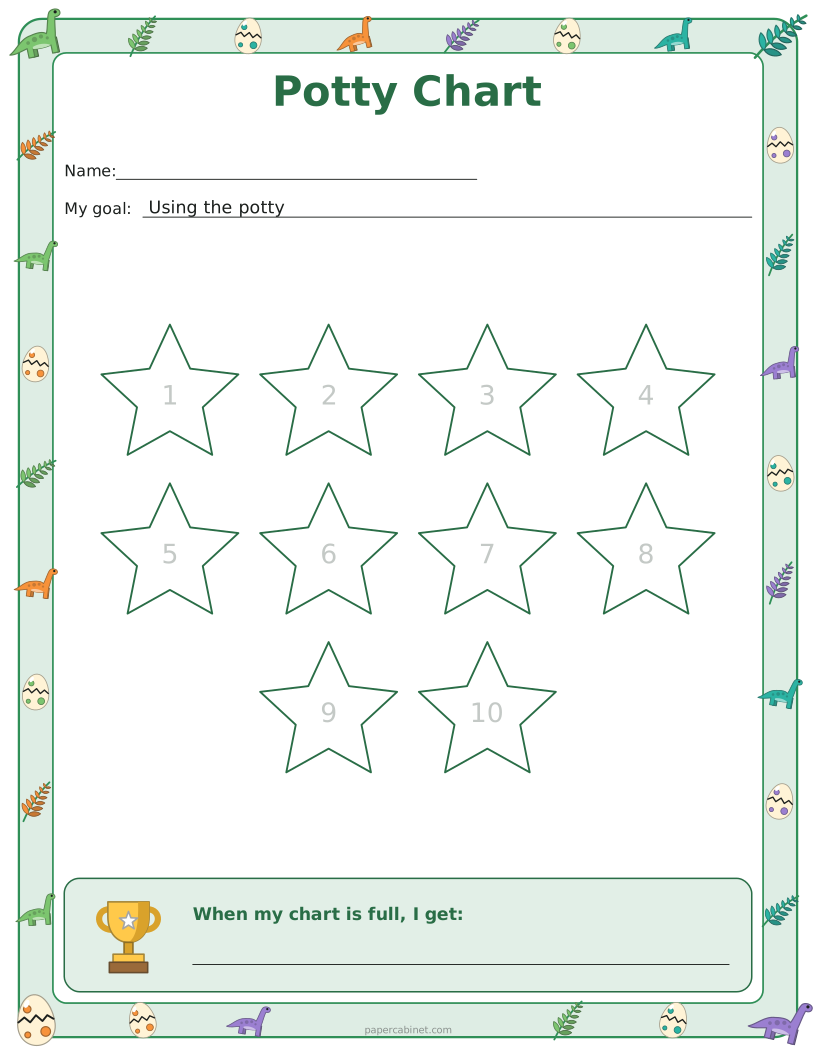
A 10-space potty chart, made with the reward chart maker.
How Many Spaces for Each Age?
Age
Spaces
How long it should take
Example goals
2 to 3
5 to 10
2 to 5 days
Using the potty, putting shoes by the door
4 to 6
10 to 20
1 to 2 weeks
Staying in bed, brushing teeth, kind words
7 to 9
20 to 30
2 to 4 weeks
Reading 20 minutes, practising piano, homework
10 and up
30 or more
A month or longer
Saving toward something, chores without reminders
The reward chart maker lets you choose anywhere from 3 to 50 spaces, as stars, circles or squares. Pick circles or squares if you use round stickers or a stamp.
Toddlers: Keep It Short and Immediate
At two or three, a reward a week away might as well not exist. Start with five big spaces, like the sticker chart for toddlers, and give the sticker the moment it is earned. Let your child stick it on themselves; for many toddlers, that is the reward.
For potty training, ten spaces is a good first goal. The potty training chart has ten large stars, a line for the goal and a box for the prize. When it fills, print the next one straight away so the habit carries on.
Tip. Put the chart at your child's eye level, on the fridge or the bathroom door. A chart they can see and touch gets used.
Ages 4 to 6: One Goal at a Time
Children this age can wait a little longer, but they still need the goal stated plainly. "Stay in your bed until the clock turns green" works. "Be good at bedtime" does not, because the child cannot tell when they have done it.
Fourteen spaces fits two weeks of nights, which is why the bedtime chart uses that number. For a behavior chart, 20 spaces is enough for a real goal without dragging on.
Number each space so your child can count how far they have come. That is on by default, under "Number each space".
Ages 7 to 9: Let Them Help Choose
Older children care more about the reward and about having a say. Sit down together and agree on the goal, the number of spaces and the prize. A chart they helped plan feels like theirs.
Reading charts work well at this age. The reading reward chart has 30 squares, one for each 20 minutes of reading, which is about a month of nightly reading.
For daily jobs rather than one goal, a chore chart with a box for each day suits this age better than a sticker chart.
What Rewards Work?
Rewards do not have to cost money. Many children care more about choosing than about the thing itself.
Time together. An extra bedtime story, a trip to the park, baking cookies with a parent.
Choices. Picking dinner, choosing the weekend film, deciding where to go on a walk.
Small privileges. Staying up 15 minutes later, a later wake-up on Saturday, first turn at a game.
Things. A small toy or book, kept for longer charts. Save bigger items for charts of 30 spaces or more.
Write the reward on the chart before you start, in the "Reward when it's full" box. Seeing it every day keeps your child working toward it.
When to Stop Using a Chart
Charts are for building a habit, not forever. Once the behavior happens without reminders for a couple of weeks, finish the current chart, celebrate, and stop. If it slips, a short chart brings it back.
For school-age children who have earned something special, a printed award certificate makes the end of a long chart feel like an occasion. And if you are planning games for a party where prizes are on the line, see how to run bingo for a large group.
Help
Frequently Asked Questions
At what age do sticker charts work? +
From about two years old, as long as the chart is short and the sticker comes straight away. They stay useful until about ten, after which a simple checklist or a points tally often works better.
How many stickers should a reward chart have? +
Five to ten for toddlers, 10 to 20 for ages 4 to 6, and 20 to 30 for ages 7 to 9. Make the first chart easy to fill so your child learns that it leads somewhere.
Should I take stickers away for bad behavior? +
Most parents find it works better not to. A sticker that can be lost feels less like an achievement. Keep the chart for the goal, and deal with other behavior separately.
What if my child loses interest in the chart? +
Change something: a shorter chart, a different reward, or a new goal. Interest usually drops when the reward feels too far away.