To run bingo for a large group, print one different card per player plus a few spares, choose a caller with a loud voice and a checklist, and decide the winning pattern before the first call. Use 5 × 5 cards with a free space, call slowly, and check every winning card against the caller's list.
Published October 24, 2026
By Paper Cabinet
That works for a classroom of 30, a church hall of 80, or a family reunion that spills into the yard. The rest of this guide covers the details that go wrong with a big crowd: how many words you need, how to keep the game moving, and how to settle "I had bingo first".
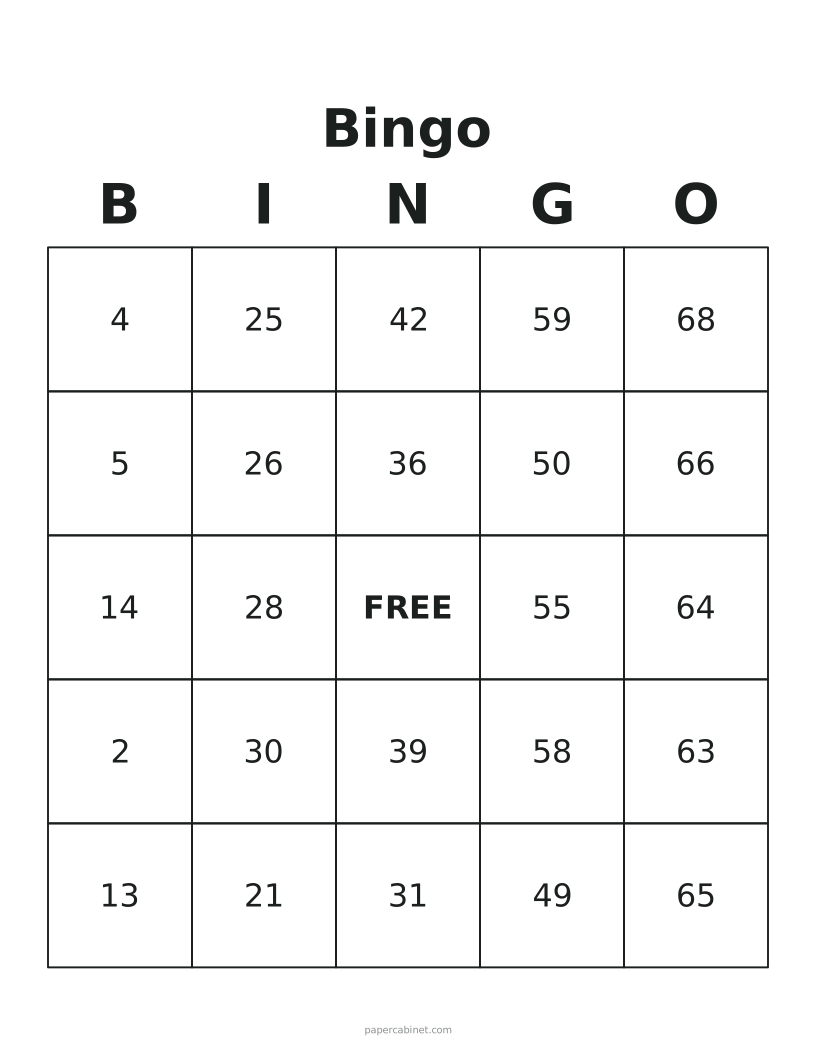
A standard 75-ball card, made with the bingo card generator.
How Many Cards Should You Print?
One per player, plus about 10 percent. Spares cover latecomers, spilled drinks and the child who wants a second card. Our bingo card generator makes up to 100 different cards at a time, so for a group of 150, print two batches of 75 and press Shuffle in between.
Printing two cards to a page halves your paper and still leaves squares big enough to mark with a pen. Four to a page works for number bingo at a table, but the squares get small for older eyes.
Group size
Cards to print
Cards per page
Sheets of paper
25
28
2
14
50
55
2
28
100
110
2
55
Words or Numbers?
Numbers 1 to 75 are the classic choice for adults, and every card follows the standard rule: B is 1 to 15, I is 16 to 30, N is 31 to 45, G is 46 to 60 and O is 61 to 75. That makes calls easy to follow ("G 52").
Words suit kids, parties and themed events. For a big group, use at least 40 words. With only 24 (the minimum for a 5 × 5 card with a free space), every card has the same words in a different order, and half the room gets bingo on the same call. With 40 to 50 words, each card holds a different mix, so wins arrive one or two at a time.
Tip. Pull the word list from your event. For a school fundraiser, use teachers' names and school words. People pay more attention when the calls mean something to them.
Setting Up the Room
Give the caller a microphone if the room holds more than about 40 people. A raised voice is fine for a classroom; it fails at the back of a hall.
The caller's checklist prints with the cards. It lists every word or number once, so the caller ticks each one as it is called. Cut a spare copy into slips and draw them from a bowl, or call the numbers in order from a shuffled printout.
For markers, anything flat and cheap works:
dried beans, pennies or buttons for adults at tables
Cheerios or mini marshmallows for kids (have extra, they get eaten)
dabbers or crayons if the cards are single use
Running the Game
Announce the pattern before the first call: one line, four corners, an X, or a full card ("blackout"). Write it on a board if you have one.
Call each word or number twice, with a pause between. Big groups need longer than you think, especially when some players have several cards.
When someone calls bingo, stop. Have them read their marked squares aloud while the caller checks the list.
If the card is good, give the prize and start a new round. If not, carry on calling from where you stopped.
A one-line round is over quickly. A blackout needs most of the list called, so save it for the last game of the night.
Settling Ties and Disputes
Agree on the tie rule before you start: two players who call bingo on the same word share the prize, or play a quick tiebreaker (the next called word decides). Saying it at the start prevents the argument later.
Ask winners to keep their card until it is checked. A card that has been cleared cannot be verified, and the caller's list is the only record.
Printing Tips
Print on cardstock if you will reuse the cards, and slide them into sheet protectors so players can mark them with dry-erase markers. Turn off "Add a caller's checklist" on the second batch so you do not print an extra list.
If you want a ready set for the holidays, the Holiday Bingo Pack has twelve themed games with 30 cards each. For a reunion or classroom game, start from a template like Christmas bingo or road trip bingo and edit the words.
Running a game for kids who are working toward a prize? Our guide to sticker chart ideas by age covers how to make small rewards work.
Help
Frequently Asked Questions
How many words do I need for bingo with 100 people? +
At least 40, and 50 is better. More words means fewer people win on the same call. The generator warns you if the list is too short for the card size you picked.
Can two people have the same bingo card? +
Not within one batch. Each card the generator makes in a batch is different, as long as the word list has enough words. If you print a second batch, press Shuffle first so it does not repeat the first.
How long does a game of bingo take? +
A one-line round is usually over in a few minutes. A full card takes several times longer, because nearly every word has to be called. Mix short and long rounds to fill the time you have.
What can I use instead of bingo dabbers? +
Dried beans, coins, buttons or small candies. For kids, cereal pieces are cheap and quiet. For single-use cards, a crayon or pen works and leaves a record for checking.