

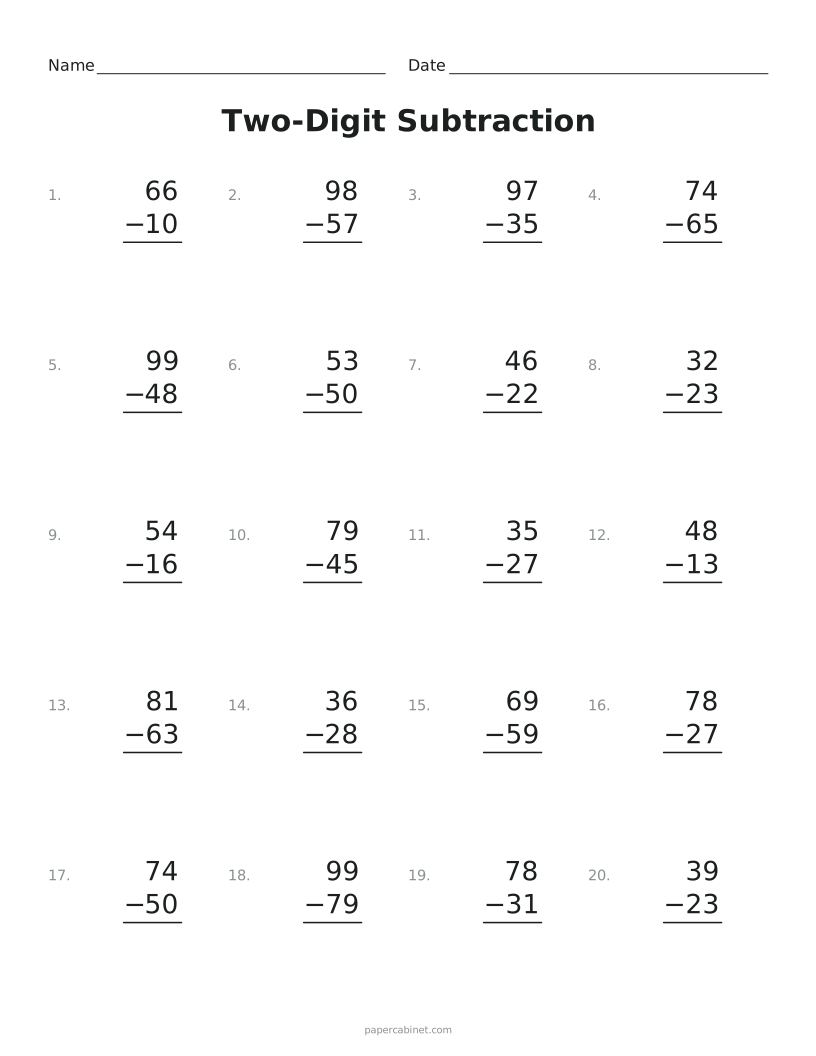
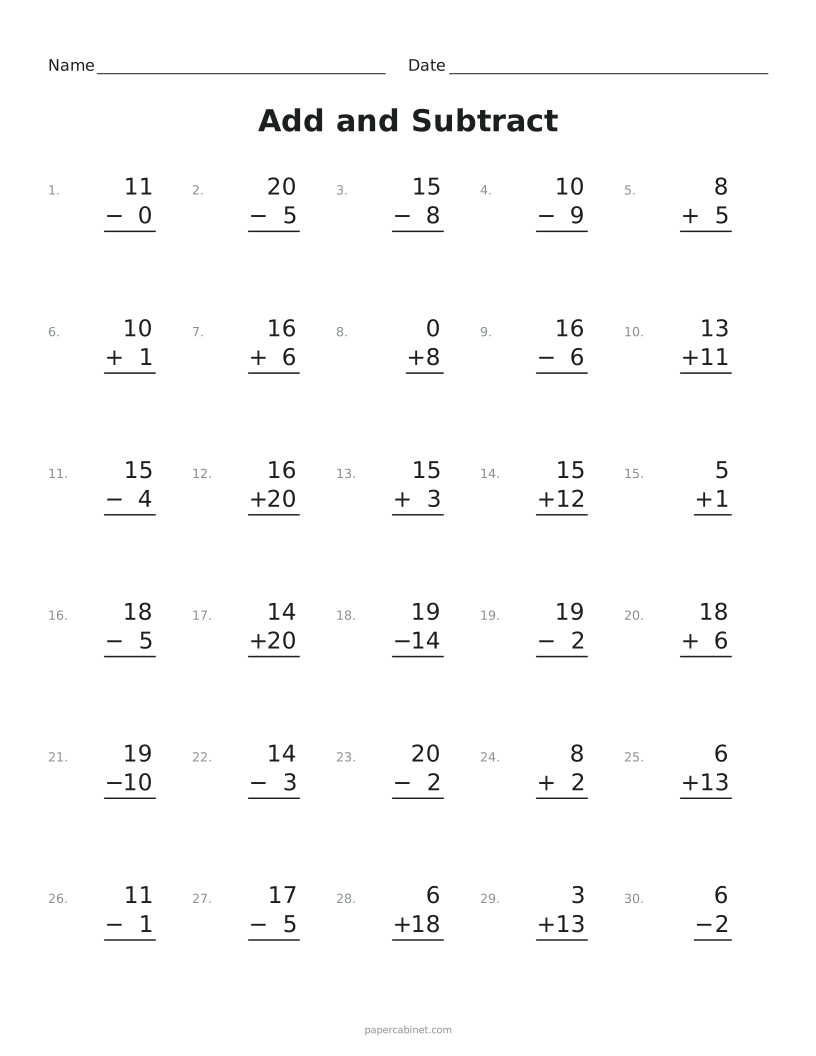
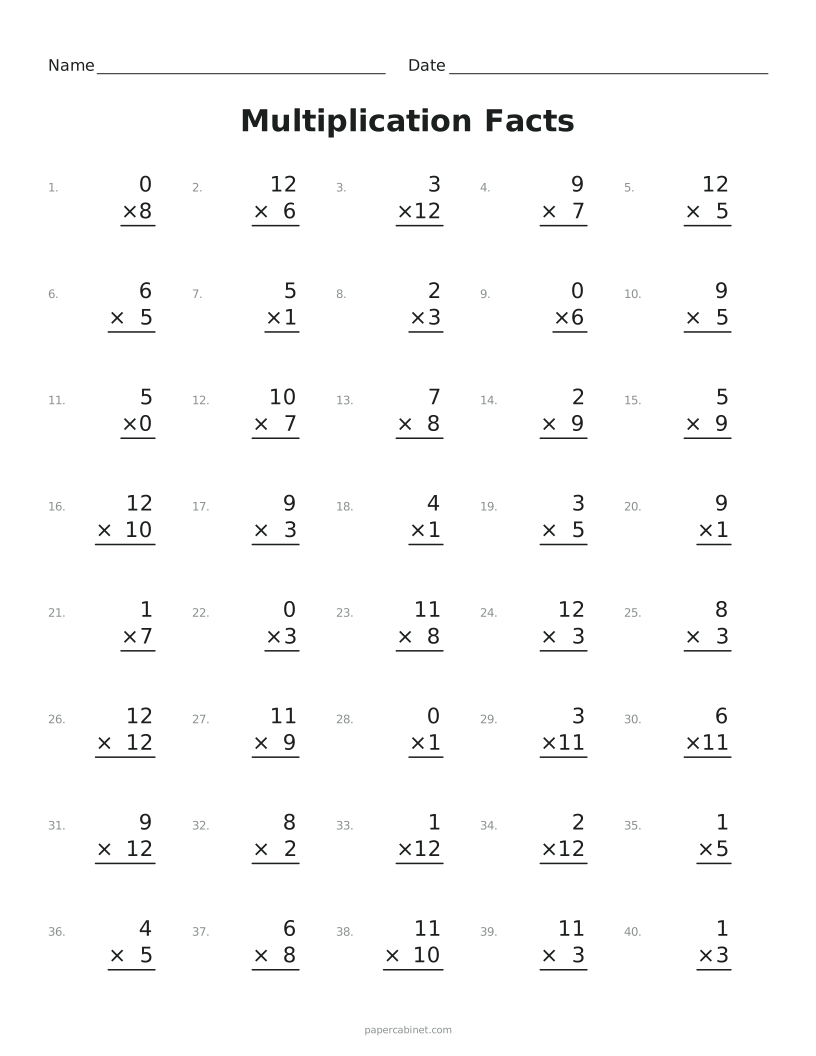
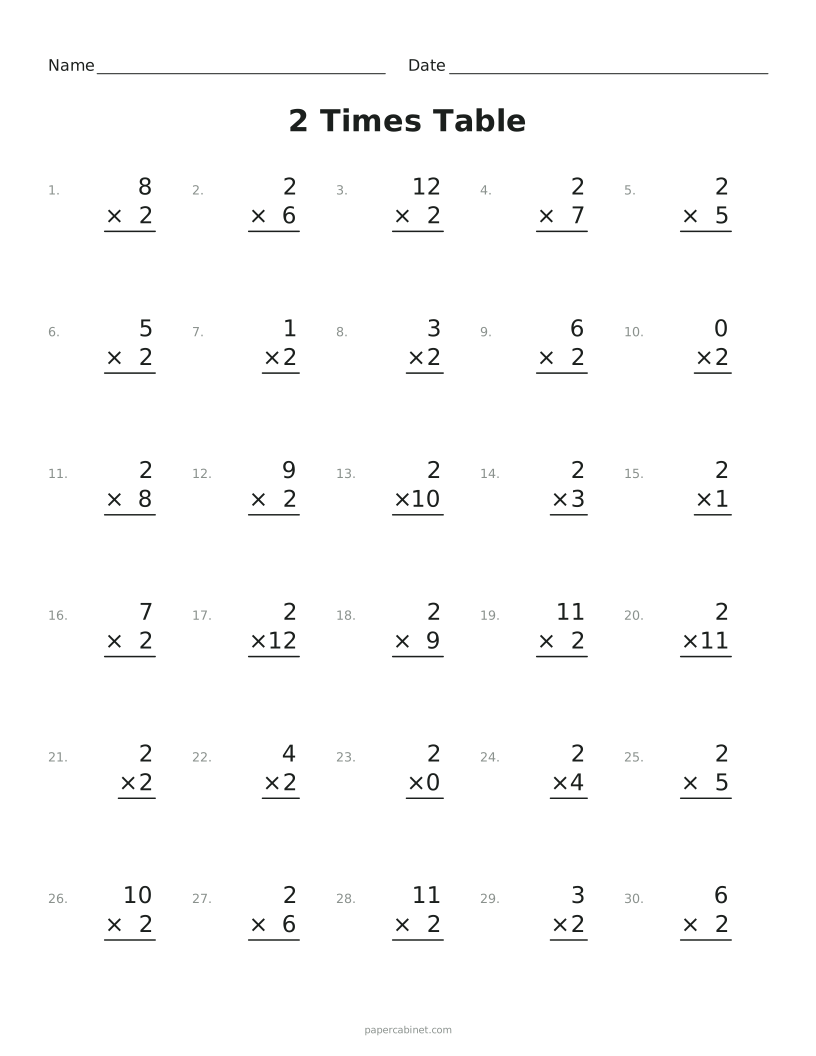
Three steps to a printed page
-
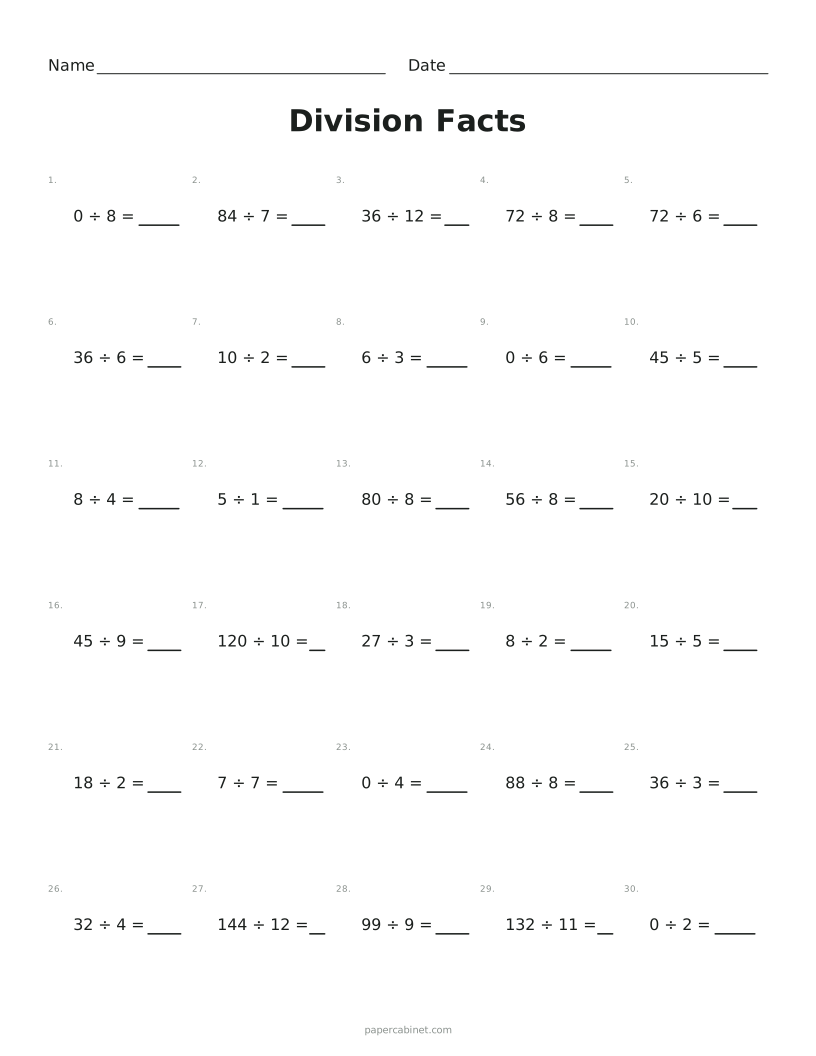
Choose addition, subtraction, both, multiplication or division.
-
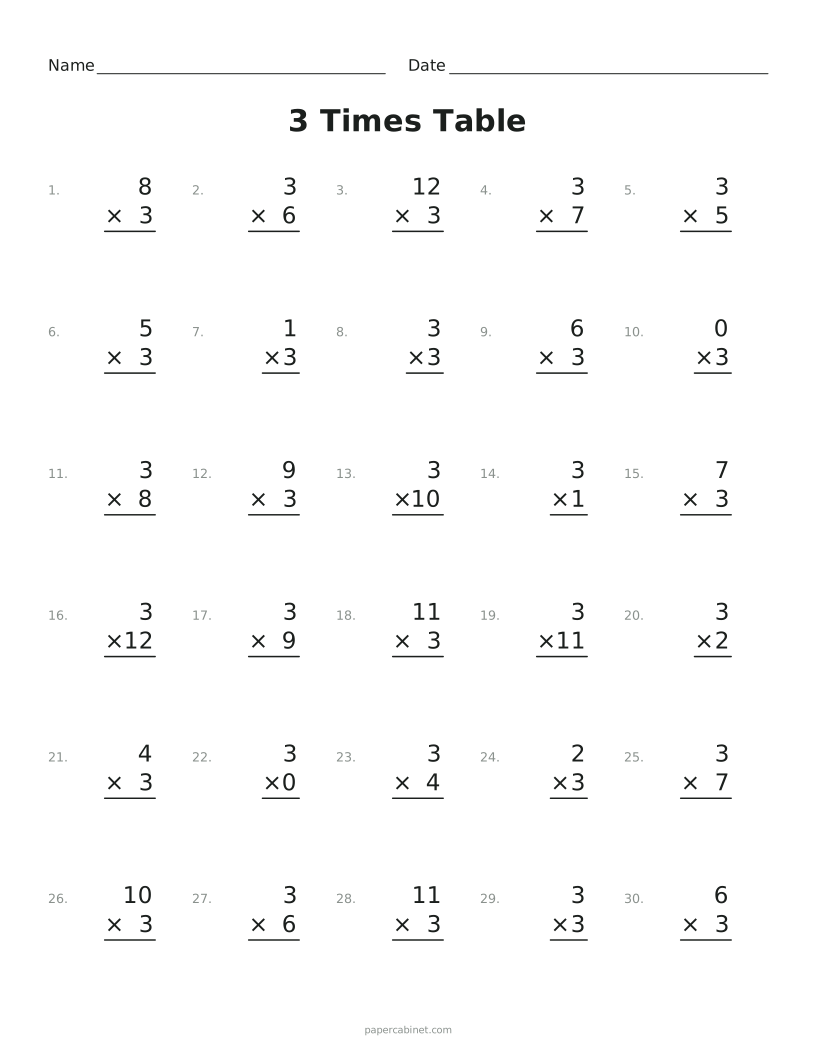
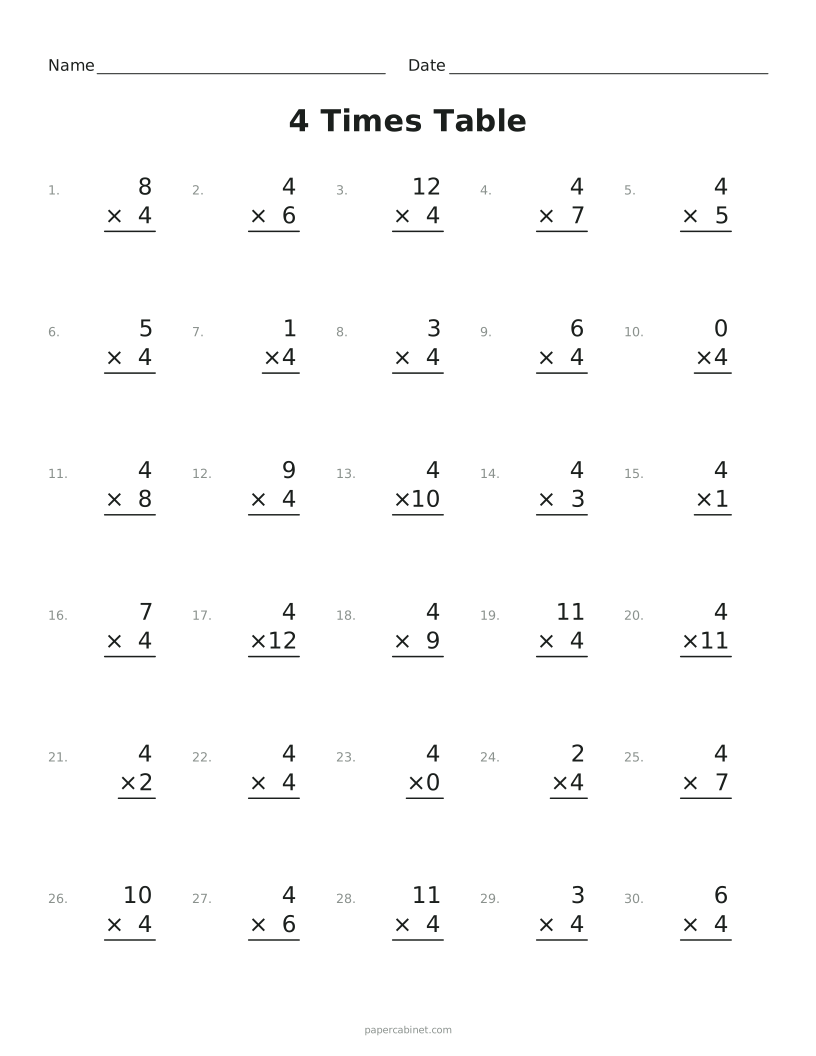
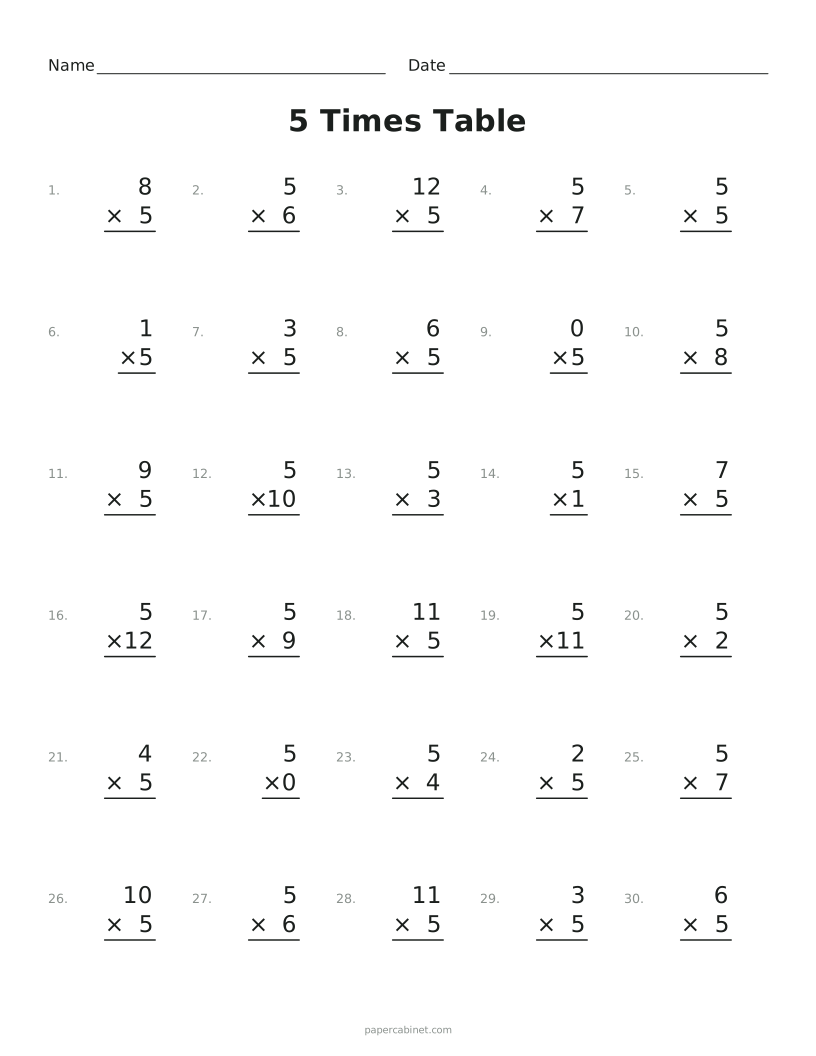
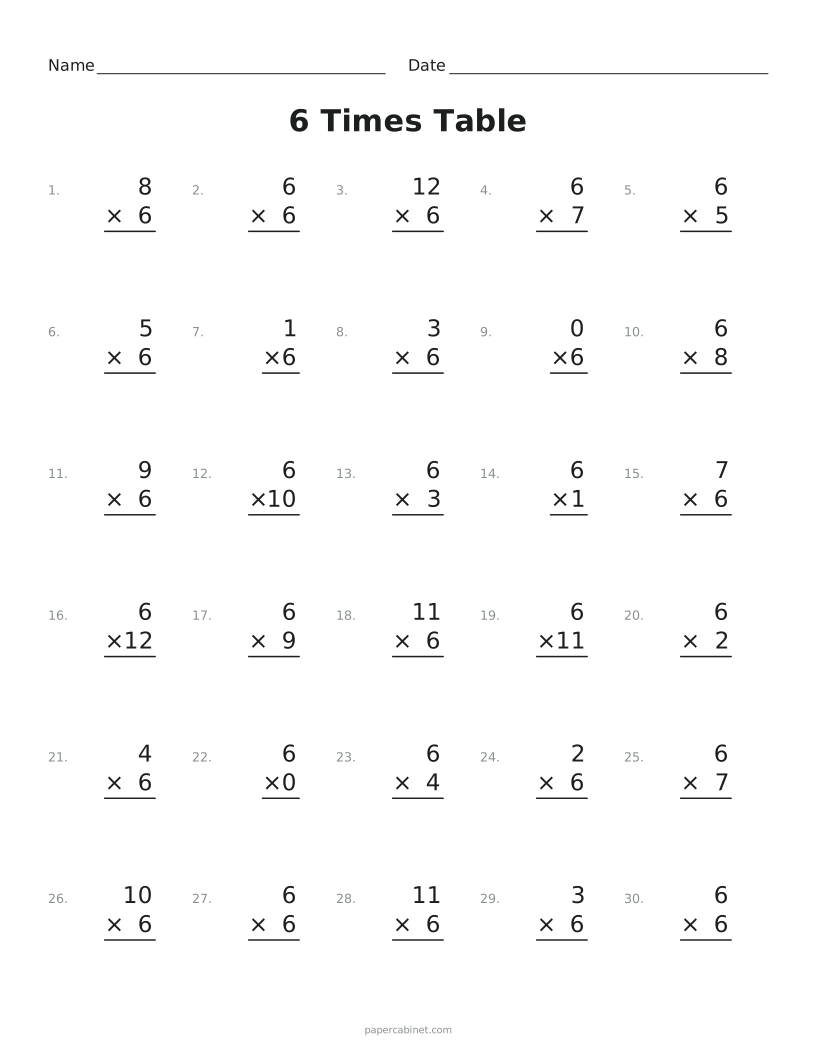
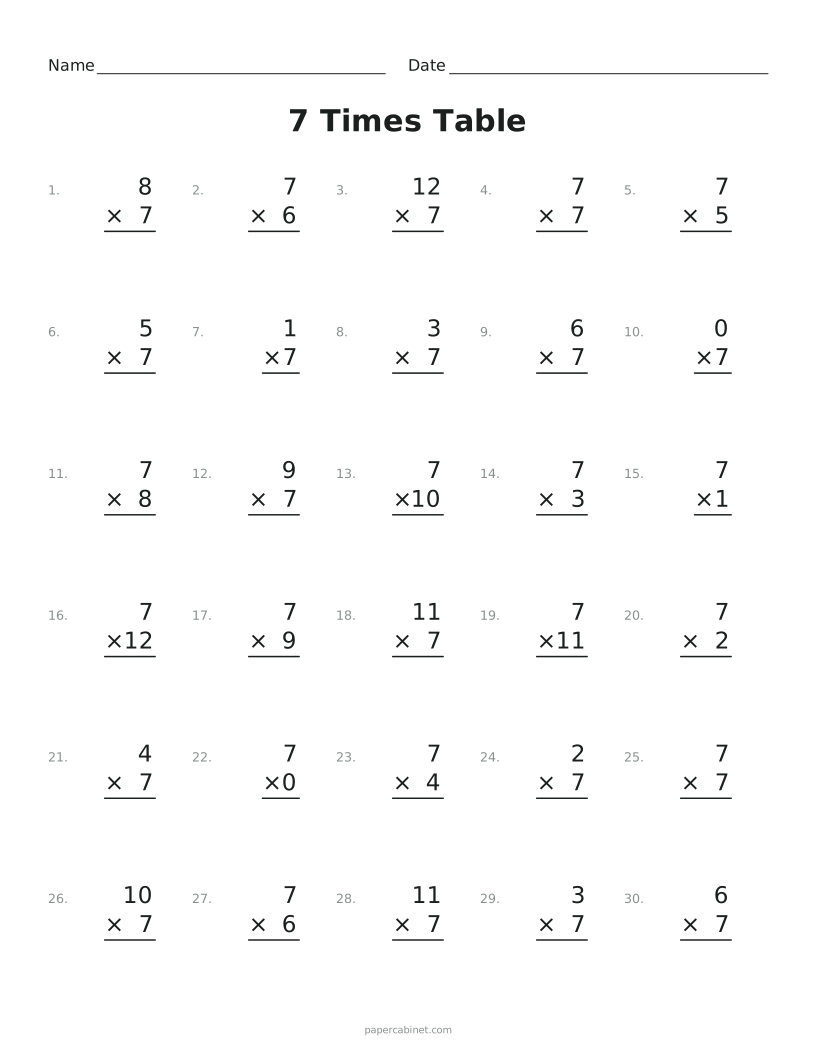
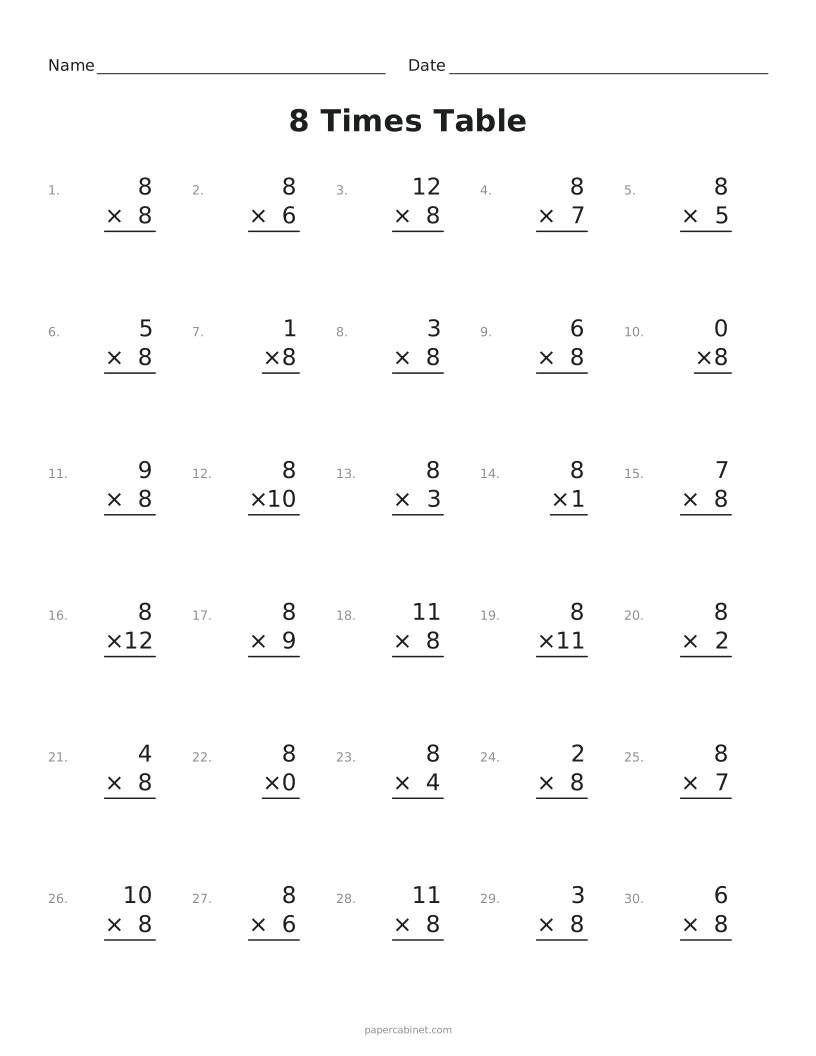
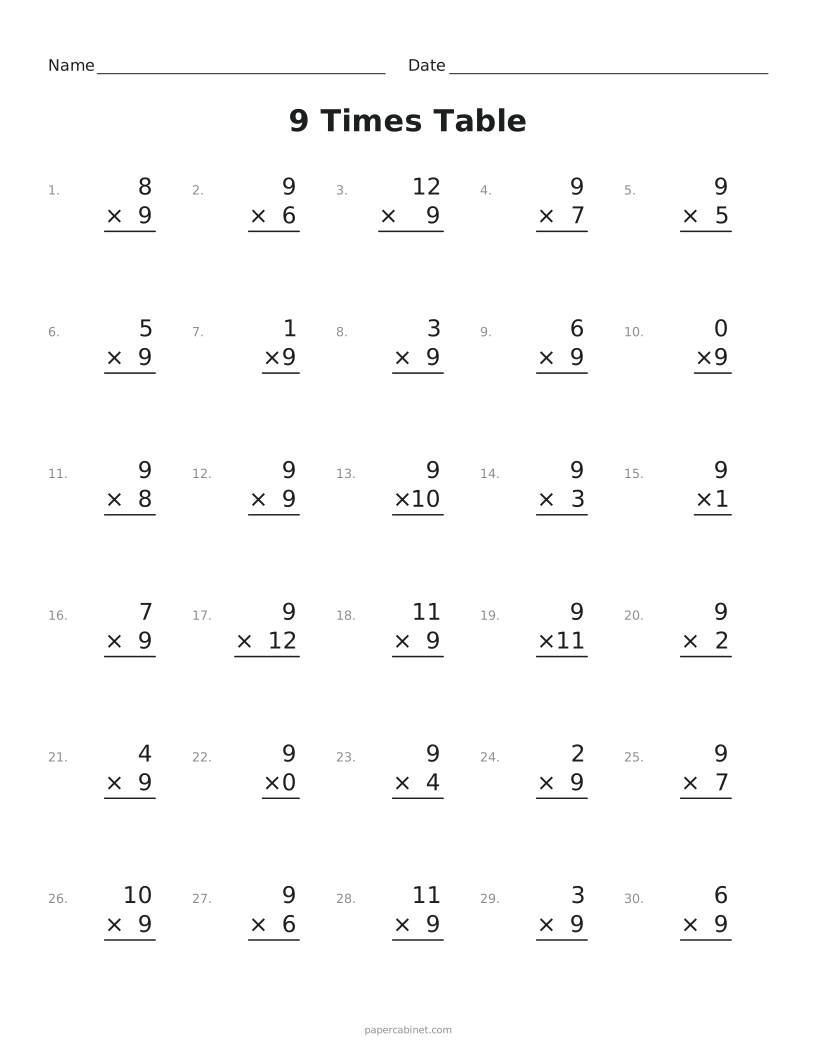
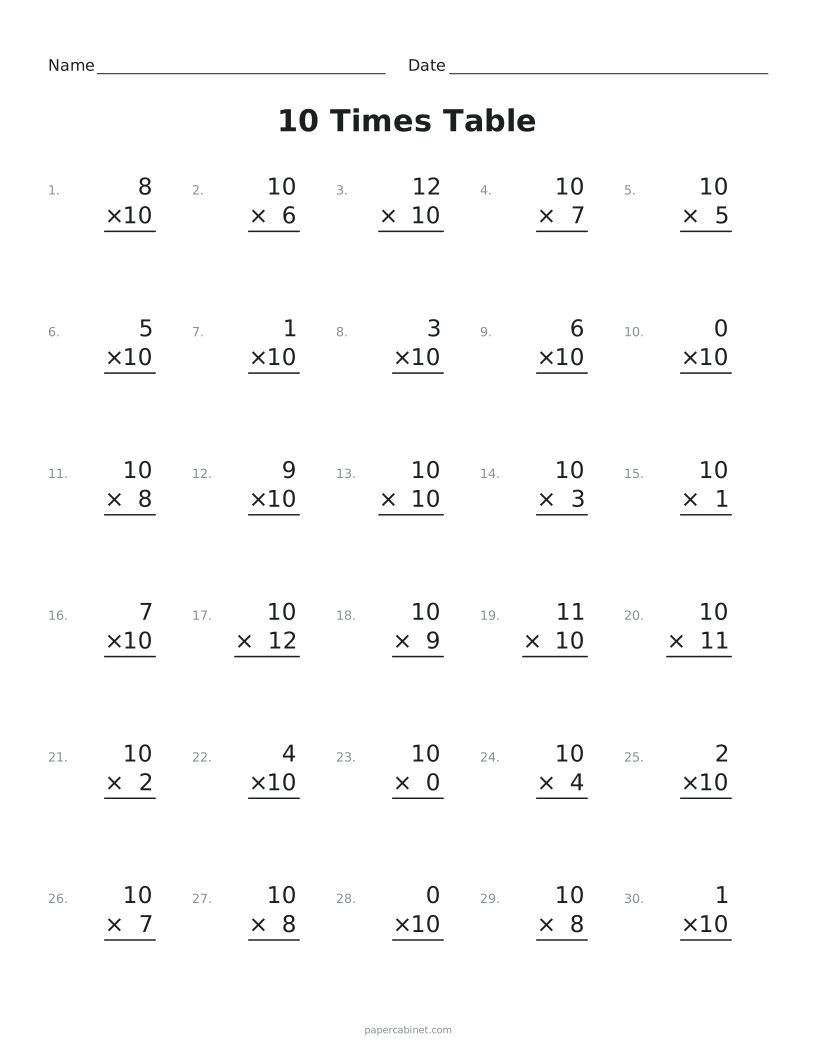
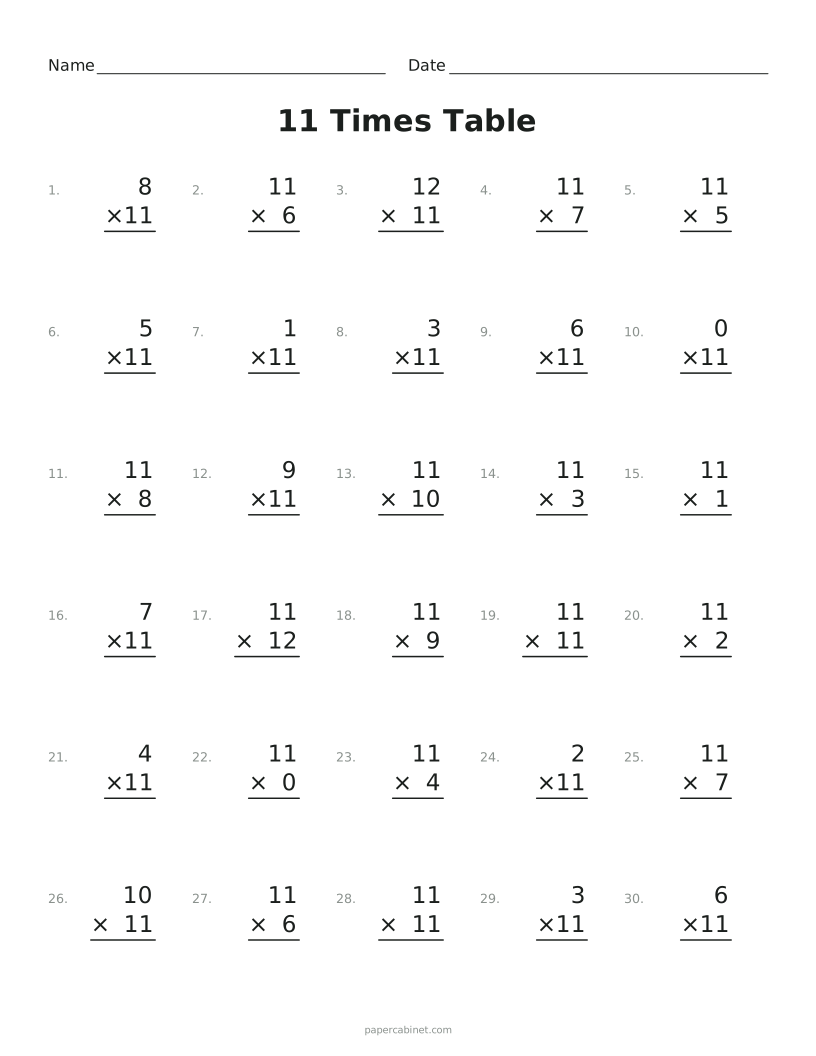
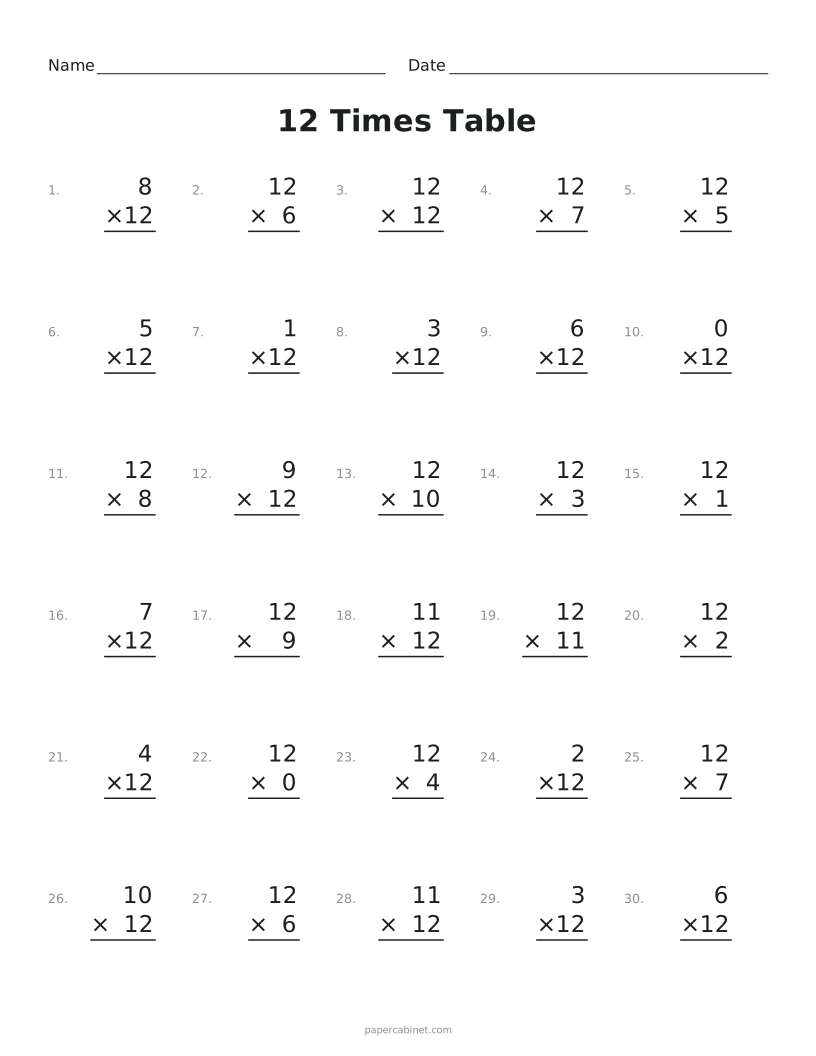
Set the smallest and largest numbers, or pick one times table to practise.
-
Press Print. The answer key comes out on its own page.
Building fact fluency
Short and often beats long and rare. Five minutes on a 20-problem sheet every day does more for fact recall than an hour once a week. Because every Shuffle makes a new sheet, kids can't memorise the page itself.
Try timing one sheet on Monday and the same settings again on Friday. Kids like seeing their own time drop, and it's a competition nobody else can lose.
Suggested ranges by grade
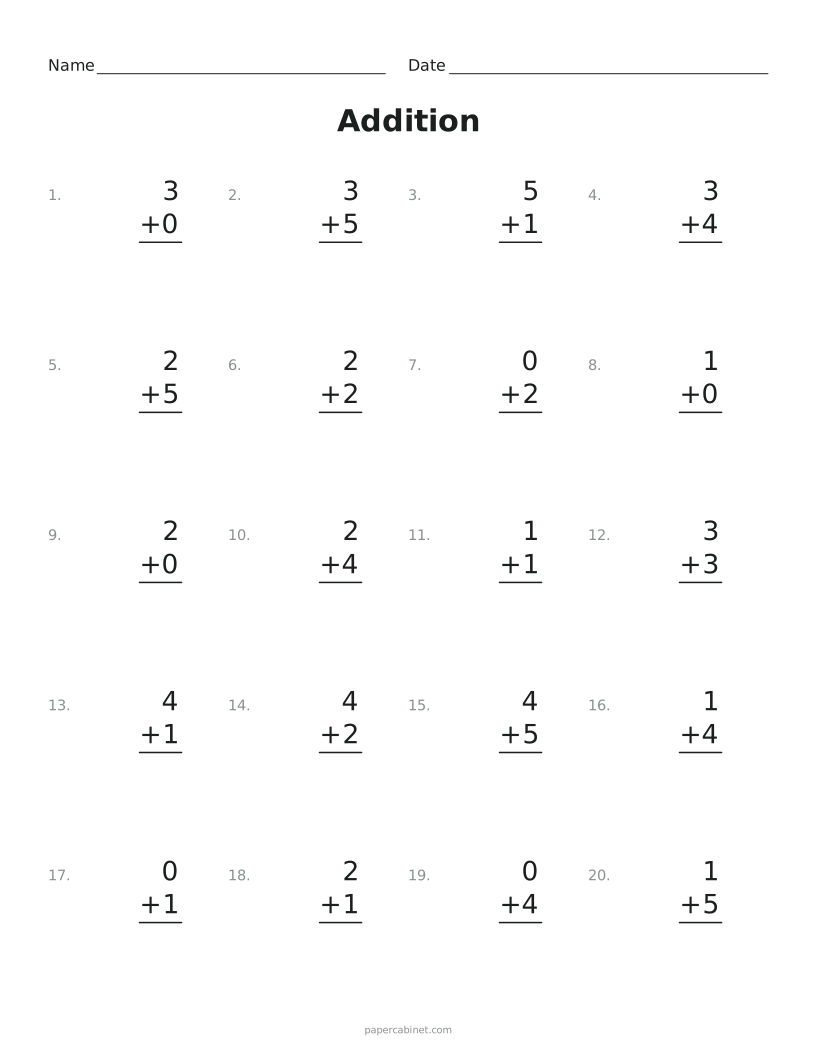
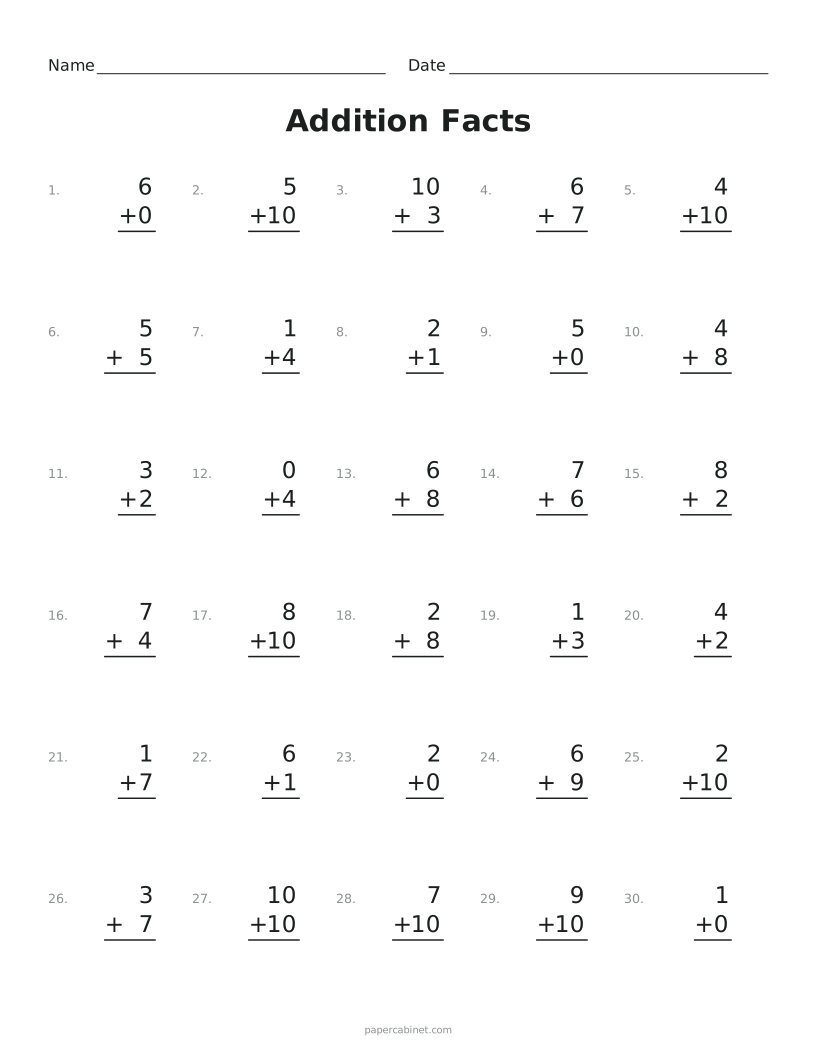
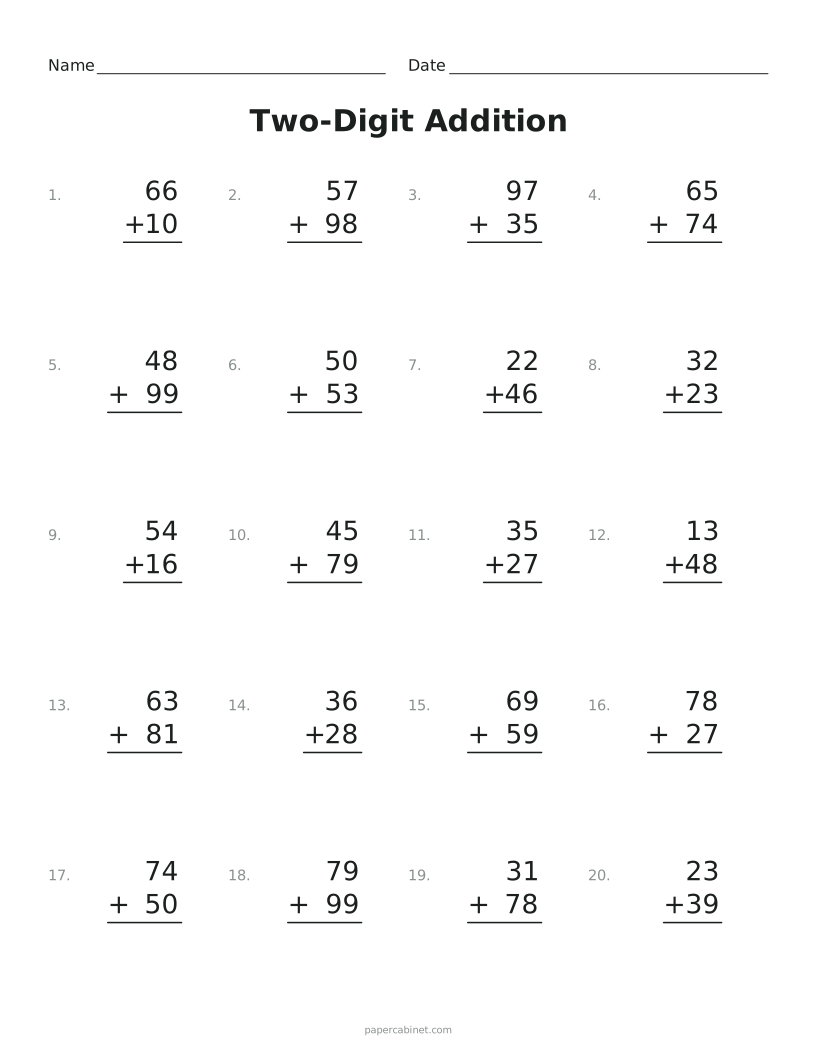
Kindergarten: addition and subtraction from 0 to 5, then 0 to 10. First grade: within 20. Second grade: two-digit numbers, 10 to 99. Third grade: multiplication and division facts from 0 to 10, then up to 12. Fourth grade and up: bigger numbers, like 100 to 999.
These line up roughly with the Common Core, but every class is different. If a sheet takes under two minutes, it's time to stretch the range.
Frequently Asked Questions
Do the math worksheets come with answer keys?
Yes. Every worksheet prints with a matching answer page, with the answers in green.
Will subtraction problems have negative answers?
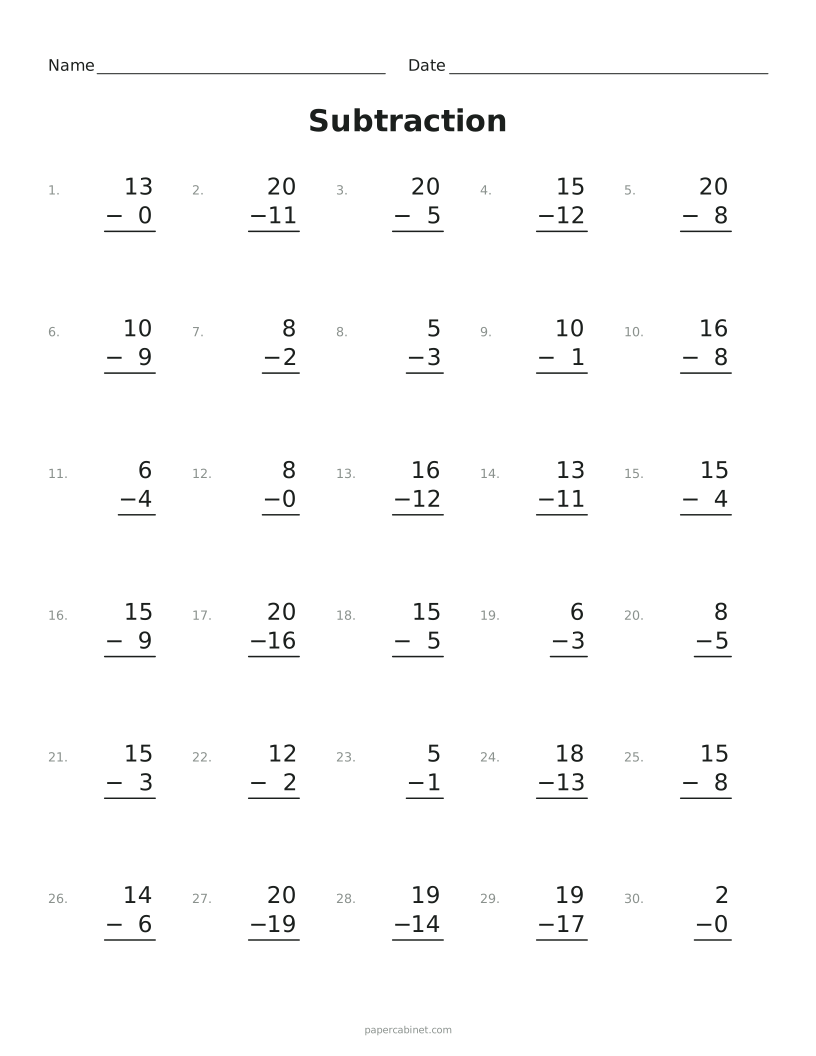
No. The bigger number always goes on top, so every answer is zero or more.
Do division problems have remainders?
No. Each problem is built from a multiplication fact, so every answer is a whole number.
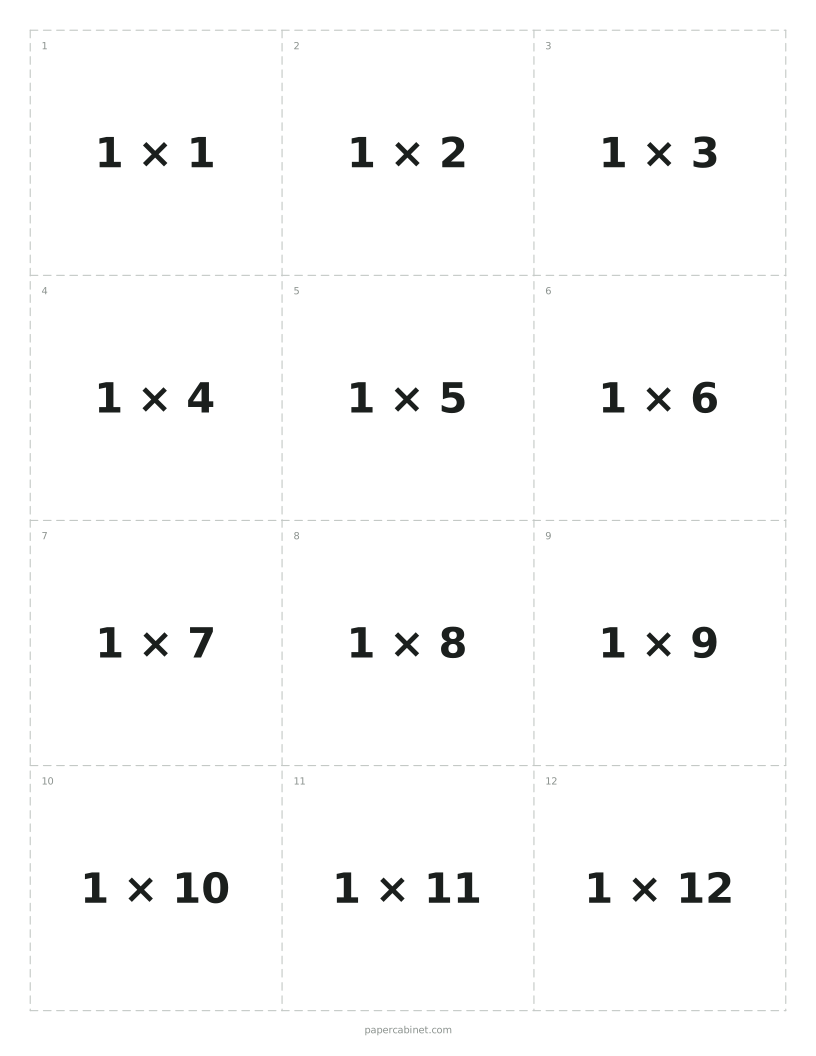
Can I make a worksheet for just one times table?
Yes. Choose multiplication or division, switch on "Practise one times table" and pick the table.